
Currently Empty: $0.00

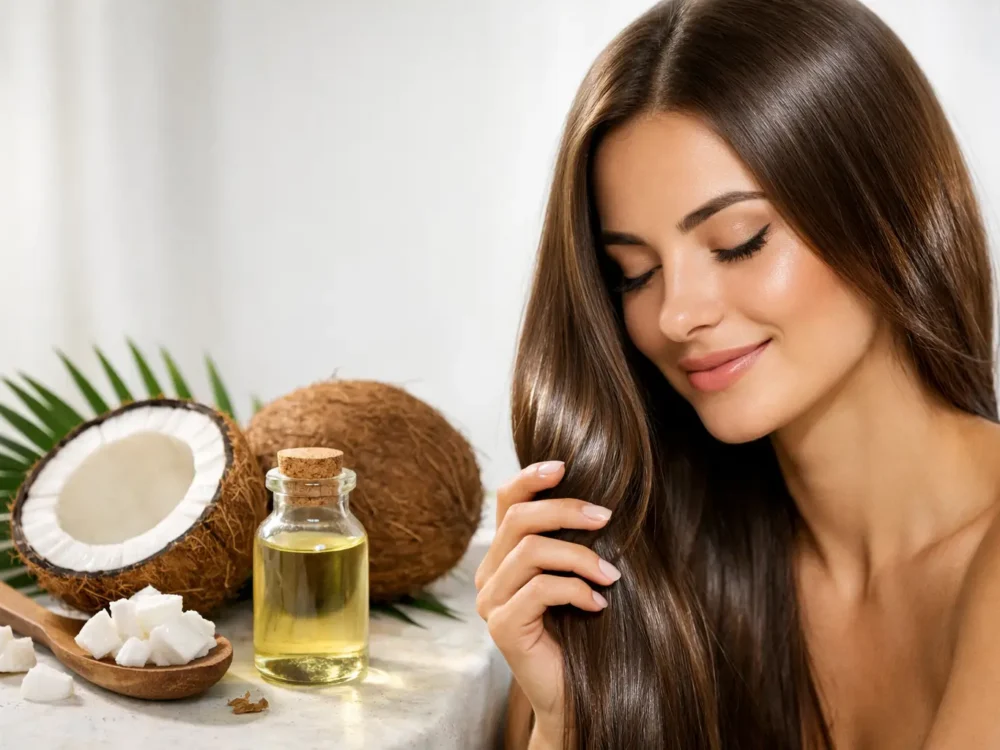
Flat, dull hair usually does not need another styling product piled on top. More often, it needs less friction, less moisture loss, and a better finishing step. That is where coconut oil for hair shine earns its place. Used well, it can help hair reflect light better, feel smoother, and look healthier without turning your routine into a 10-step project.
The catch is simple: coconut oil can make hair look glossy, but it can also make it limp or greasy if you use too much or apply it the wrong way. The real win comes from matching the amount and method to your hair type.
Why coconut oil for hair shine works
Hair looks shiny when the surface lies relatively smooth and flat. When the cuticle is rough from heat styling, washing, sun exposure, or dryness, light scatters instead of reflecting evenly. That is why damaged or thirsty hair often looks dull even when it is clean.
Coconut oil helps in a few practical ways. First, it coats the hair shaft lightly, which can smooth the outer layer and improve light reflection. Second, it helps reduce moisture loss, which matters because dry hair tends to feel coarse and appear matte. Third, it can soften the look of frizz and flyaways, especially on the mid-lengths and ends where damage tends to show up first.
What makes coconut oil especially popular is that it is not just a cosmetic quick fix. It is also known for its affinity with hair proteins, which is one reason it has stayed relevant in both traditional beauty routines and modern hair care.
That said, shiny does not always mean healthier, and healthier does not always mean instantly shinier. If your hair is heavily bleached, over-processed, or coated with product buildup, coconut oil may help, but it will not erase damage overnight.
Who gets the best results
Coconut oil is not a one-size-fits-all shine solution. It tends to work best for dry, coarse, thick, curly, or textured hair because these hair types usually need more lubrication and moisture support. If your ends feel rough, your hair puffs up in humidity, or your strands lose shine after washing, coconut oil may be a strong fit.
If your hair is very fine, naturally oily, or prone to looking flat by midday, you need a lighter hand. In these cases, coconut oil can still work, but the dose matters more than the product itself. One or two drops can add polish. A teaspoon can make it look like you skipped wash day for a week.
Scalp type matters too. A dry scalp may tolerate occasional pre-wash oiling well. An oily scalp may do better if you keep the oil strictly on the lengths and ends. If you deal with dandruff, irritation, or scalp sensitivity, patch testing first is the smart move.
The best ways to use coconut oil for hair shine
The most effective approach depends on whether you want immediate shine, deeper nourishment, or frizz control.
As a pre-wash treatment
This is one of the safest ways to use coconut oil if you are worried about greasiness. Warm a small amount between your palms and apply it to dry hair, focusing on the mid-lengths and ends. Leave it on for 20 to 60 minutes before shampooing.
This method helps soften rough strands before washing and can reduce that stripped, squeaky feel some shampoos leave behind. It is especially useful if you heat style often or wash your hair several times a week.
As a post-wash finishing touch
If shine is your main goal, this is often the best option. Start with barely any oil – less than you think you need. Rub it between your hands until it disappears, then smooth it over the ends and any frizzy sections.
Do not start near the roots unless your hair is very thick and dry. For most people, the shine payoff happens at the bottom half of the hair, where dryness and dullness tend to collect.
As an overnight mask
For dry or textured hair, an overnight treatment can leave strands softer and glossier by morning. Apply lightly, braid or wrap your hair, and wash thoroughly the next day.
This can be helpful once a week, but it is not necessary for everyone. Fine hair may find overnight oiling too heavy, even with a double shampoo.
How much to use without overdoing it
This is where most routines go wrong. Coconut oil is concentrated, and using more does not create more shine. It usually creates more residue.
Short or fine hair may only need 1 to 3 drops as a finishing step. Medium-length hair may need 3 to 5 drops. Thick, long, or curly hair can handle more, especially as a pre-wash treatment, but even then it is better to build slowly.
A good rule is to stop when your hair feels smoother, not wet. If your hands look oily after application, you probably used too much.
Common mistakes that make hair look greasy instead of glossy
The first mistake is applying coconut oil to soaking-wet hair and expecting it to behave like a serum. Water and oil do different jobs. If your hair is dripping, the oil may sit unevenly and leave patches that look heavy.
The second is applying it at the scalp when your real concern is dull ends. Unless your scalp is very dry and you are intentionally doing a treatment, keep the oil away from the roots.
The third is using coconut oil on top of multiple stylers, leave-ins, and silicone-rich products without clarifying your hair occasionally. Product layering can reduce movement and make shine look more like buildup.
The fourth is assuming every hair wash needs oil. Some hair loves routine oiling. Some only needs it after sun exposure, heat styling, or a dry week. Pay attention to results, not trends.
What type of coconut oil is best?
If you are using coconut oil topically, quality matters. Look for extra virgin, unrefined coconut oil with a clean ingredient list. That usually means no unnecessary additives, no synthetic fragrance, and no fillers.
A cleaner product is especially useful if you are applying it near the scalp or using it regularly. It also aligns better with a wellness routine built around straightforward, natural ingredients. If you already shop for clean-label essentials, this is one area where the same standards make sense.
For shoppers who want a simple multipurpose option, a high-quality extra virgin coconut oil can pull double duty in both beauty and daily wellness routines. On Sterling Nutrition, that kind of practical, purity-focused product fit is exactly the point – fewer compromises, easier everyday use.
Coconut oil vs other shine solutions
If you compare coconut oil with lightweight hair serums, the biggest difference is feel. Serums are usually engineered for instant slip, fast shine, and humidity control. Coconut oil is more natural, more versatile, and often better for deeper nourishment, but it can feel heavier.
Compared with argan oil, coconut oil is typically richer. Argan tends to suit fine or medium hair more easily because it is lighter on the strands. Coconut oil often performs better for thicker, drier textures that need more smoothing power.
Compared with castor oil, coconut oil is usually the easier choice for visible shine. Castor oil is much thicker and can be harder to spread evenly. It has its place in beauty routines, but if your main target is a glossy finish without excessive weight, coconut oil is usually more user-friendly.
When coconut oil may not be the best fit
There are cases where coconut oil is not your best answer. If your hair is protein-sensitive, very low porosity, or easily weighed down, you may find it leaves the hair stiff or coated instead of soft and shiny. In that situation, a lighter oil or a specialized glossing product may work better.
It also may not solve dullness caused by hard water, color damage, or heavy buildup. If your hair still looks flat after oiling, the issue may be residue or mineral deposits rather than dryness alone. A clarifying wash and less heat styling could do more for shine than another layer of oil.
A simple routine that works for most people
If you want a no-fuss place to start, use coconut oil once or twice a week as a pre-wash treatment, then add a tiny amount to dry ends only when needed. That gives you the shine benefit without overwhelming your hair.
If your hair responds well, keep going. If it starts looking heavy, scale back the amount or switch the timing. Good hair routines are rarely about using more. They are about using the right product in the right amount, often enough to see results but not so often that your hair loses bounce.
Shiny hair usually comes from consistency, not excess. A small amount of the right coconut oil, used with intention, can do more than a crowded shelf full of products that never quite earn a second purchase.